

How to Run a Bioculture Trial: Protocol and What to Measure
There is a specific kind of dread that settles in when you are considering switching to a new biological additive and your next PCB inspection is six weeks away. You have heard the pitch before. The sales rep was confident, the product literature looked solid, and then three weeks in, your BOD climbed, your MLSS dropped, and you spent the next month explaining to your compliance officer why effluent numbers looked worse than they did before the trial started.
That experience is more common than anyone in this industry likes to admit. And it is not always the product’s fault.
The truth is, most bioculture trials fail not because the biology does not work, but because the trial itself was never properly designed. There was no clean baseline. The evaluation window was too short. Variables were not isolated. And when something shifted, nobody could say with confidence whether it was the bioculture, a load spike, an aeration issue, or just normal process variation.
This guide is written for the plant superintendent, the ETP manager, the environmental engineer who has been burned before and needs a structured, compliance-safe bioculture trial protocol they can actually implement, one that produces real data, protects their consent posture, and gives the biological additive a fair evaluation. If you are serious about biological additive evaluation and doing it right, start by getting clear on what a bioculture for wastewater treatment is designed to do, and what it can reasonably be expected to do in a system like yours.
Why Most Bioculture Trials Are Set Up to Fail

Walk into any plant that has had an inconclusive bioculture trial and ask what the baseline data looked like before introduction. More often than not, you will get a pause. Maybe some logbook entries. Maybe a rough idea of where BOD was running. But rarely a clean, consistent, two-week record of influent and effluent parameters, MLSS trends, SVI behavior, and DO profiles.
That is the first failure. Without a documented baseline, you have no reference point. You cannot measure improvement against a number you never recorded.
The second failure is timeline. ETP managers, under pressure to demonstrate results and justify procurement decisions, often evaluate a bioculture trial over a window that is too short for any meaningful biological shift to occur. Bacteria do not operate on procurement timelines. Establishing a stable, active microbial population in a biological treatment system takes time, and that time varies significantly depending on your system’s HRT, SRT, and the existing biomass condition.
The third failure is variable isolation. If your inlet load changes significantly during the trial, or if you adjust your aeration regime, or if you switch a coagulant, and you did not document those changes, you cannot attribute any outcome, positive or negative, to the bioculture with any credibility. Untreated inlet shock loads arriving mid-trial are the single most common reason a good product looks like a bad one.
The reason this guide matters is simple: a well-designed ETP bioculture trial is not complicated, but it does require discipline. And when a parameter moves and you cannot explain it, the discipline is to diagnose why an ETP is underperforming biologically before you blame the product. That discipline starts before you open the product container.
Before You Begin, Establishing a Reliable Baseline
This is, without question, the most important phase of any bioculture trial protocol. If you skip this, everything that follows is opinion, not evidence.
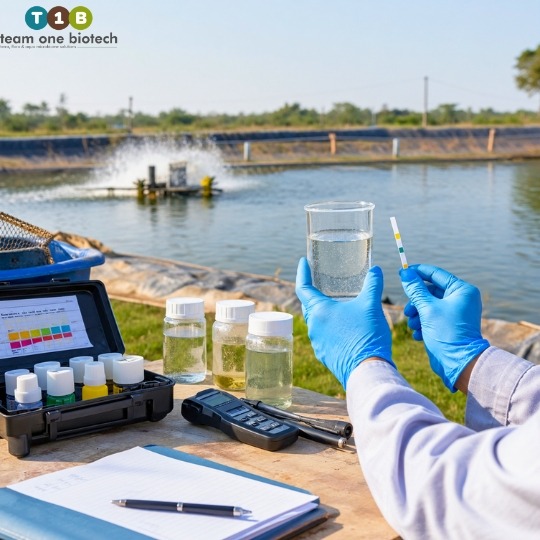
Before introducing any biological product into your system, commit to a minimum of one to two weeks of consistent, documented parameter recording. This is your reference window. Every measurement you take during the trial will be compared against this baseline, so the quality of your baseline directly determines the credibility of your results.
Here is what needs to be tracked and documented before day one of the trial:
Influent flow rate and load variation, Know what is coming in. Inlet load fluctuations during the trial are one of the most common confounding factors. If you did not document them in the baseline period, you cannot account for them later.
BOD, inlet and outlet, Your biochemical oxygen demand numbers, both ends, measured consistently and at the same time of day if possible.
COD, inlet and outlet, Chemical oxygen demand, same discipline. Do not mix sampling times between baseline and trial periods.
TSS, Total Suspended Solids, At the effluent end, and ideally at key internal points if your system design permits.
MLSS, Mixed Liquor Suspended Solids, This tells you where your biomass concentration is sitting. Any biological trial changes this number over time; knowing where it started is essential. If you have never worked the number through properly, read up on how much bioculture your plant actually needs and calculate your MLSS, F/M ratio and organic loading rate before you set any dosing target.
SVI, Sludge Volume Index, Settleability of your mixed liquor. Changes in SVI during a trial can indicate shifts in floc structure, filamentous activity, or biomass health. SVI belongs on any serious checklist for monitoring biological health and effluent stability, because it usually moves before your compliance parameters do.
Dissolved Oxygen (DO), At the inlet to the aeration zone, mid-zone, and outlet. DO profiles tell you whether your system is supporting aerobic biological activity at the levels the incoming load demands.
pH and temperature trends, Both affect biological activity profoundly. Document them daily.
Sludge age or SRT, if applicable, Particularly relevant in activated sludge systems and MBBRs where biological retention time directly influences the trial timeline.
Record all of this consistently. Use the same sampling points. Use the same lab methods. Do not change your lab protocol midway through and then try to compare numbers.
The Bioculture Trial Protocol, Step by Step
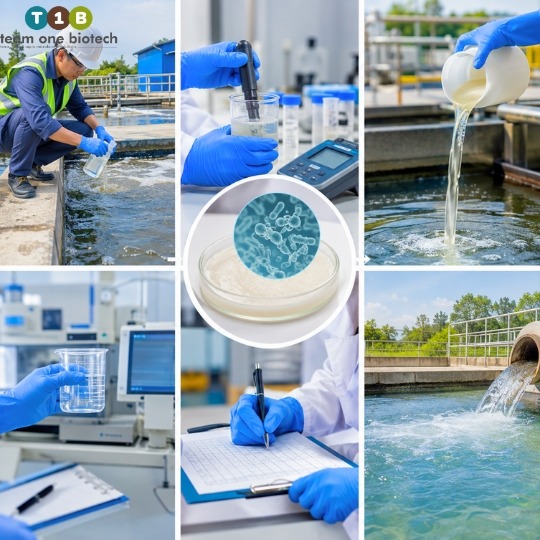
This is the core of structured bioculture testing. Six steps, applied with discipline, will give you data you can actually use.
Step 1, Define Your Trial Zone and Timeline
Before anything goes into the system, decide exactly where the trial will run. Is this a specific aeration tank? A dedicated zone in an SBR or MBBR system? The full biological treatment train? The answer affects how you dose, what you monitor, and how you interpret results.
Be clear about your timeline, and be realistic. A meaningful bioculture trial duration depends on your system’s HRT and SRT, and it is rarely as short as plant managers initially hope. Systems with longer hydraulic retention times or slower biological cycles need more time for any microbial shift to express itself in effluent quality numbers. Rushing this is the single biggest mistake made in ETP bioculture trials. If you close out the evaluation before the biology has had adequate time to establish, you will get inconclusive data and draw the wrong conclusions.
Plan for a minimum evaluation window of several weeks. Systems with high complexity or longer HRT may require considerably more time.
Step 2, Confirm System Stability Before Introduction
Do not introduce a bioculture into an unstable system. This sounds obvious, but it is violated regularly.
If your plant is currently managing a sudden inlet load spike, dealing with a toxic event, recovering from an aeration equipment failure, or trending toward a consent boundary, wait. Wait until the system has returned to the conditions represented in your baseline.
Why? Because introducing a biological product into an unstable system does two things simultaneously: it complicates the trial and it complicates your compliance posture. If parameters deteriorate after introduction, you will not know whether the plant was already heading in that direction or whether the bioculture introduction was a factor. And when you are standing in front of a CPCB or SPCB inspection officer, “we were in the middle of a trial” is not a strong position.
Confirm that DO, pH, MLSS, and inlet load are all within the ranges documented in your baseline before proceeding to dosing.
Step 3, Dosing Strategy and Introduction Method
There are two distinct phases in a bioculture dosing program: seed dosing and maintenance dosing.
Seed dosing is the initial, higher-concentration introduction of the biological culture. The goal here is to establish a meaningful population of the target microbial strains within the treatment system. Maintenance dosing comes after, a lower, ongoing application designed to sustain population levels and compensate for washout from the system over time.
When introducing the bioculture, do it gradually. Do not dump the entire seed dose in at once if the system is large. Introduce it at a consistent point in the aeration zone, monitor DO response in the hours immediately following dosing, and ensure your aeration is running at levels that support the incoming biology.
Do not adjust your aeration regime significantly during the first week of the trial. You want the bioculture to be the variable, not your aeration.
For dosing quantities and concentrations specific to your system, follow the manufacturer’s technical data sheet. System-specific dosing should be calculated based on your MLSS target, system volume, and inlet organic load, not estimated from a generic table.
Not sure about the right dosing plan for your system? Design a site-specific dosing protocol with our technical team at Team One Biotech, built around your actual plant parameters, or request free bioculture samples for your trial and put it to the test on your own effluent.
Step 4, Daily Monitoring During the Trial Period
Once dosing begins, monitoring discipline is everything. A trial without records is not a trial. It is an anecdote.
Daily monitoring: Dissolved oxygen at key aeration points, pH, temperature, and a visual observation of the mixed liquor, color, clarity, foam type, sludge blanket behavior. These daily observations cost very little time but build a picture of how the system is responding biologically before the lab numbers catch up.
Every two to three days: BOD at the effluent end, COD at the effluent end, TSS. These are your compliance parameters. Track them against your baseline numbers and flag any trend, upward or downward, immediately.
Weekly: MLSS, SVI, and if possible, a microscopic examination of floc structure. Under a microscope, you can see changes in bacterial morphology, floc density, and the presence or reduction of filamentous organisms. Experienced operators know what a healthy mixed liquor looks like under a lens. If you have access to lab microscopy, use it.
When you see a spike in BOD, COD, or TSS during the trial, do not immediately attribute it to the bioculture. Cross-reference your inlet load data from that same day. Check aeration logs. Check for any changes in upstream process inputs. Spikes happen. The question is always: what caused the spike?
Step 5, Identifying Positive Biological Indicators
BOD COD TSS monitoring gives you the compliance picture. But experienced ETP operators also know to watch for qualitative biological signals that indicate the system is responding well, often before the numbers fully reflect it.
Watch for:
Improved floc formation and settling. Better-structured biological floc settles faster and more completely. If your SVI is trending down and your supernatant is getting clearer, that is a positive signal.
Reduction in filamentous bulking. If your system had filamentous organisms causing poor settleability before the trial, a shift in biological population health will often express itself as improved sludge density and reduced filamentous presence under microscopy.
Sludge blanket stability. A more stable blanket in your secondary clarifier, without the rising sludge or floating clumps that indicate denitrification or poor settling, is a good sign.
Odor reduction in the aeration zone. A healthy aerobic biomass does not smell like a septic system. If the odor profile in the aeration zone improves, that is biology working.
Gradual improvement in effluent clarity. Not a single-day drop, a sustained, progressive improvement over the trial window. That is what you are looking for.
These qualitative observations do not replace your lab data. But they support it, and they give you early directional signals during the trial.
Step 6, End-of-Trial Evaluation
At the close of your trial window, you have your baseline data and your trial-period monitoring records. Now compare them honestly.
Define trial success correctly. The benchmark is not just whether your effluent met consent limits during the trial, your system should have been meeting those limits before the trial as well. The question is: did performance improve in a measurable, sustained way over the pre-trial baseline? Did MLSS stabilize or improve? Did BOD and COD outlet values trend downward relative to inlet load? Did SVI move in the right direction?
A single parameter spike during the trial does not constitute failure, context matters. If that spike coincided with an unusual inlet event, a power interruption to aeration, or a known upstream process change, account for it in your evaluation. Attributing a load-driven COD spike to a bioculture without checking the inlet data is bad engineering.
Pilot Trials Only Check Viability & Efficiency — Full-Scale ETP Results Are Always Much Better
A pilot trial is not designed to show you the best-case performance of a bioculture. It is designed to answer only one question: Does this biology survive, acclimatize, and create a measurable positive shift in YOUR effluent, under YOUR plant conditions? In a pilot, you are dosing a limited zone, for a short window, with high washout and without complete system colonization. You are seeing the START of the biological curve, not the peak. In an actual, full-scale ETP, with continuous maintenance dosing, complete aeration volume colonization, proper SRT control, and mature biofilm and floc formation over 60-90 days, the results are always significantly better. What looks like a modest 15-20% improvement in COD/BOD and a small drop in SVI during a pilot trial typically translates to 30-50% better treatment stability, stronger shock-load recovery, and sustained compliance in full-scale operation. So do not judge the final ROI on pilot numbers alone. The pilot proves viability. The full-scale ETP is where biology delivers its real performance.
Compliance Continuity, Running a Trial Without Risking Your Consent

This is the section that ETP managers actually read twice.
A well-designed bioculture trial is additive to your treatment process. It introduces biology that supports and enhances your existing biomass, it does not replace your treatment system or create a compliance gap. But that only holds true if the trial is designed correctly.
The CPCB and SPCB effluent discharge norms that govern your consent to operate do not pause for trials. Your effluent quality must remain within those norms regardless of what is happening inside your aeration tank. This means your trial design must include a contingency plan.
If during the trial window you see any parameter trending toward your consent boundary, BOD climbing, TSS rising, your response protocol should be clear and pre-decided: increase aeration, reduce inlet load if possible, pause any non-essential process adjustments, and contact your bioculture supplier’s technical team immediately with your monitoring data.
Do not wait for a breach to react. The monitoring frequency built into this protocol exists precisely to give you early warning. Use it.
Team One Biotech products are formulated for smooth integration into existing biological treatment systems. Before beginning your trial, reach out to our compliance-aware technical team, we help you plan for zero disruption to your consent conditions.
What to Do After the Trial, Decision Framework
Your trial is complete. You have the data. Now make a decision based on it, not on intuition.
If results show consistent improvement across BOD, COD, TSS, MLSS, and SVI, sustained across the full trial window, with no compliance events and stable system behavior, proceed to full-scale adoption. The data supports it.
If results are mixed: Before concluding anything about the product, re-evaluate your dosing. Assess whether there were inhibitory substances present in the influent during the trial, surfactants, heavy metals, disinfectants, that could have suppressed microbial activity. Consult the supplier’s technical team with your full dataset before making a procurement decision.
If no measurable improvement is observed: Investigate system conditions first. Was DO consistently at adequate levels throughout the trial? Was pH within the range that supports the bioculture’s target microbial populations? Was the organic load within the range the product is designed to treat? Product performance is always context-dependent. Eliminate system factors before concluding product failure.
Team One Biotech’s technical team is part of this evaluation process, not just the sales process. Bring your data to us.
Frequently Asked Questions About Bioculture Trials
Q: How long should a bioculture trial run before evaluating results?
Trial duration depends on your system’s HRT, SRT, and existing biomass health. A meaningful trial typically spans several weeks at minimum. Systems with longer HRT or slower biological cycles will need more time. Closing the evaluation window too early is one of the most consistent reasons bioculture trials yield inconclusive or misleading data.
Q: Can I run a bioculture trial while staying compliant with CPCB/SPCB norms?
Yes, and that is exactly how a trial must be designed. A properly structured bioculture trial is introduced into a stable system, monitored daily, and managed so that effluent quality remains within consent limits throughout. Team One Biotech’s technical team routinely assists clients in planning compliance-safe trials tailored to their specific discharge conditions.
Q: What parameters should I monitor during a bioculture trial?
At a minimum: BOD, COD, and TSS at the effluent end, along with MLSS, SVI, DO, pH, and temperature within the biological treatment zone. The specific parameters and acceptable ranges vary by plant type, system design, and the discharge norms applicable to your facility.
Q: What if I see a spike in BOD or COD during the trial?
Do not immediately attribute the spike to the bioculture. Check your inlet load data from the same day. Review your aeration performance logs. Isolate the probable cause before drawing any conclusions. Then contact your bioculture supplier with the full monitoring record for a technical assessment.
Q: Does Team One Biotech offer technical support during a trial?
Yes. Team One Biotech provides application support, dosing guidance, and trial design assistance to ensure your evaluation is structured, measurable, and safe from day one through final assessment.
Run the Trial Right, and the Data Will Speak
Come back to where this started: the anxiety of trialing a new biological additive when you have a PCB inspection on the horizon and no margin for system instability. That anxiety is legitimate. But it points to the wrong risk.
The risk is not the bioculture. The risk is a poorly designed trial, one without a clean baseline, without a realistic timeline, without disciplined daily monitoring, and without a compliance contingency plan. That kind of trial sets up both the plant and the product to fail.
A structured bioculture trial protocol, applied with the same rigor you would bring to any engineering change in your plant, is not a risk. It is how you generate the evidence you need to make a defensible procurement decision and protect your compliance record at the same time.
Team One Biotech has helped ETP and STP operators across industries run structured, compliance-safe bioculture trials that produce measurable, documented results. If you are evaluating a biological treatment solution, do not guess your way through it.
Looking to improve your ETP/STP efficiency with the right bioculture?
Talk to our experts at Team One Biotech for customised microbial solutions.
Contact: +91 8855050575
Email: sales@teamonebiotech.com
Visit: www.teamonebiotech.com
Discover More on YouTube – Watch our latest insights & innovations!-
Connect with Us on LinkedIn – Stay updated with expert content & trends!